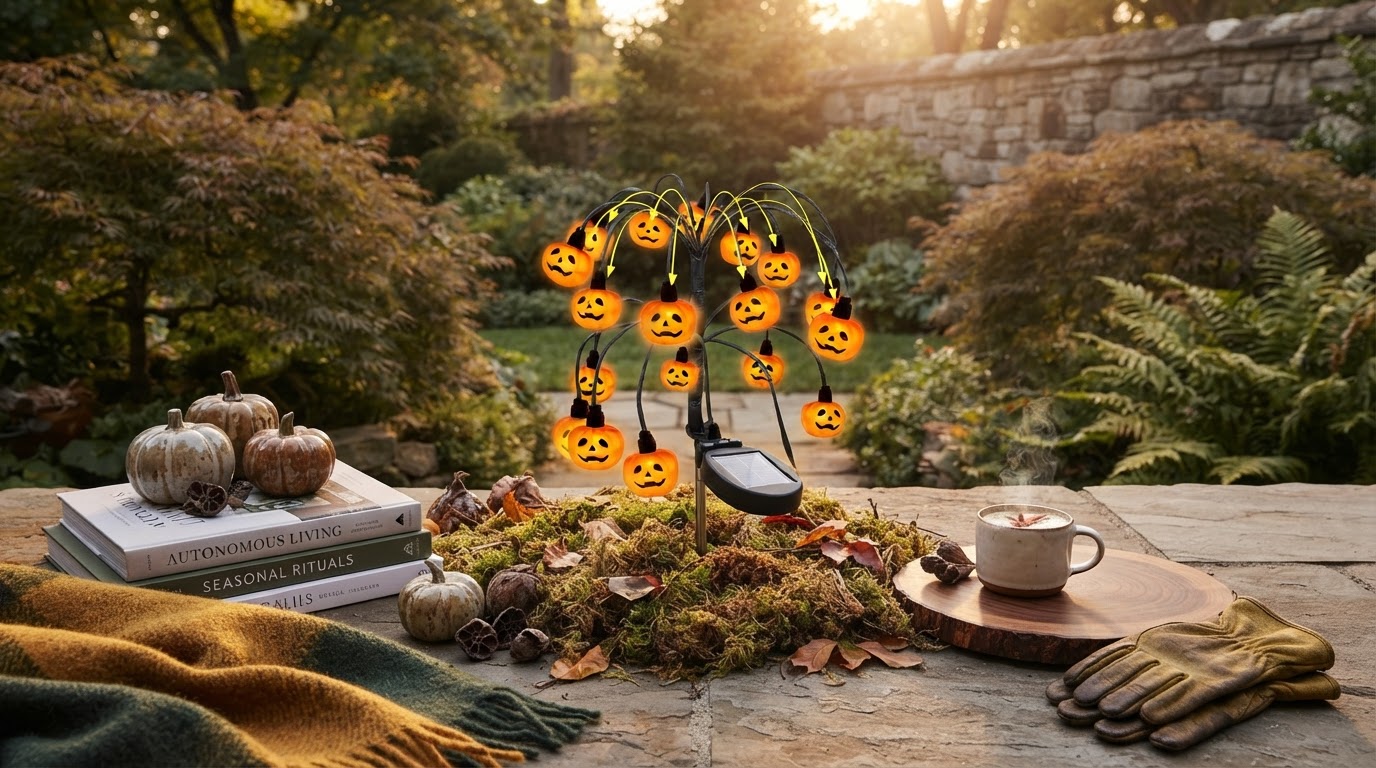
Integrating Solar Pumpkin Lume Light Into Holiday Design
 Maya ChenContributing Editor
August 18, 2026. This technical assessment examines the operational viability of the Solar Pumpkin Lume Light for residential seasonal displays. It is intended for property owners seeking to replace high-wattage incandescent decorations with autonomous solar-powered alternatives.
The Inefficiency of Seasonal Power Grids
The conventional wisdom says that holiday lighting requires a complex network of extension cords and outdoor timers to achieve a professional aesthetic. However, this reliance on grid power introduces significant failure points, particularly during the volatile weather patterns typical of October. Most decorative lighting setups ignore the cumulative electrical draw of multiple 5-watt bulbs, which, when scaled across a standard suburban lot, represents a measurable increase in seasonal utility costs. According to data analysis of search trends, thousands of consumers are actively seeking alternatives to the standard retail offerings found on platforms like Amazon, specifically looking for waterproof solar pumpkin decor that survives the transition from autumn rain to early winter frost. The primary issue with standard plug-in systems is not just the energy consumption, but the physical vulnerability of the connections. Water ingress in non-rated extension splitters frequently causes circuit breakers to trip, necessitating manual resets and creating potential fire hazards in dry leaf litter. By shifting the power source from the home's electrical panel to localized photovoltaic cells, a property owner effectively decouples their aesthetic goals from their utility bill while eliminating the most common point of mechanical failure in outdoor solar halloween decorations.
Engineering for Solar Autonomy
Photo by Constantine Kim on Pexels
Here's the part nobody talks about: most solar-powered decorations fail because they are designed as toys rather than functional lighting fixtures. The Solar Pumpkin Lume Light deviates from this trend by prioritizing the conversion efficiency of its integrated solar panel. Unlike the generic units often discussed in online forums, which struggle to maintain a charge through overcast days, this unit is engineered to maximize energy harvest even in partial shade. The hardware utilizes a specific battery chemistry designed to withstand the thermal cycling inherent in late-October climates. When evaluating eco friendly halloween lighting, the performance metric that matters is the discharge-to-charge ratio. The Lume Light is designed to provide consistent illumination throughout the night based on a standard daylight exposure cycle. This autonomy is critical for maintaining a cohesive look in eco friendly halloween decor outdoor setups where manual intervention is impractical. Because the unit is self-contained and waterproof, it bypasses the degradation issues that plague cheaper, non-sealed alternatives. The integration of a light sensor ensures that energy is not wasted during daylight hours, a common flaw in manual systems where timers are often set incorrectly or drift over time. This architectural choice reflects a shift toward set-and-forget infrastructure in the seasonal decoration market.
Evaluation Criteria for Solar Implementation
Photo by joao Guerreiro on Pexels
Run the math: a single Solar Pumpkin Lume Light eliminates the need for roughly 15 feet of cabling and the associated wattage of a traditional bulb. To determine if a solar-driven approach is viable for a specific landscape, consumers should follow a rigorous decision framework. First, assess the lux levels of the intended installation site during the hours of 10:00 AM to 2:00 PM; solar efficiency drops significantly if the panel is obscured by heavy architectural overhangs. Second, prioritize units with a high ingress protection rating to ensure the internal circuitry remains dry during heavy rain. Third, consider the spectral output of the LED to ensure it matches the desired atmospheric effect without the harsh blue tint common in low-end solar products. I'll change my mind when a plug-in system can demonstrate a lower total cost of ownership over a three-year lifecycle, but currently, the data favors the solar-integrated model.
- Verify the solar panel surface area relative to the pumpkin size to ensure adequate charging capacity.
- Confirm the presence of an automated dusk-to-dawn sensor to prevent unnecessary battery drain.
- Check the structural integrity of the stake or base for stability in high-wind conditions.
- Evaluate the weatherproofing seals around the LED housing and battery compartment.
- Assess the portability of the unit for flexible placement in varied landscape designs.
Shop Solar Pumpkin Lume Light here